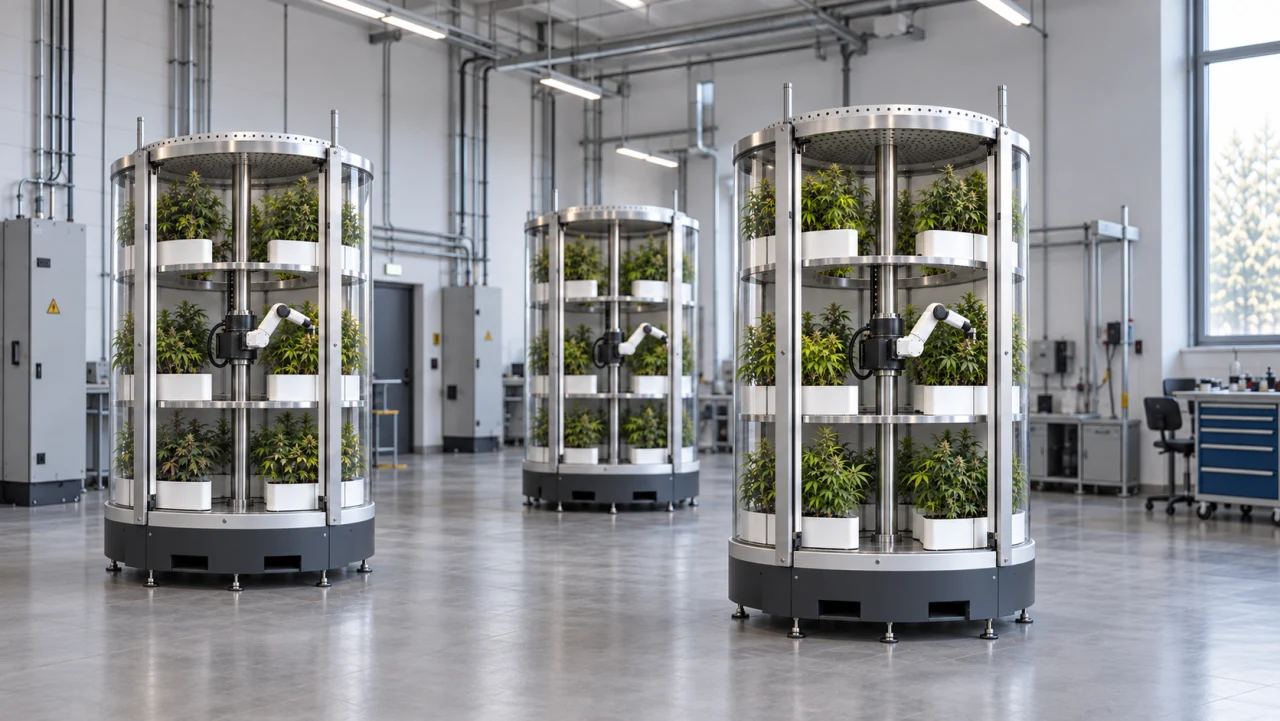
Cultivanta Intelligence brings a pharmaceutical focus to medical cannabis production in Germany. Our approach connects modular robotics, on-site intelligence and integrated facility design around quality, traceability and commercial discipline.
A pharmaceutical supply business. Engineered from the ground up.
Our focus is the business-to-business supply of medical cannabis to authorised pharmaceutical partners. The business model centres on product supply, with technology designed to support quality, repeatability and the economics of production.
The investment thesis brings the facility, automation, digital systems and energy infrastructure into one design. Customer requirements, operating economics and measurable performance guide the approach to production and scale.
Detailed commercial assumptions, project specifications and investment terms are reserved for direct discussions with prospective investors.
A defined customer
Focus on the requirements of authorised pharmaceutical buyers: consistent specifications, traceability and dependable supply.
Measurable operating economics
Assess automation through saleable output, labour requirements, uptime, quality performance and total operating cost.
A disciplined approach to scale
Connect commercial demand, operational performance and infrastructure requirements to capital allocation and expansion.
02GERMAN REGULATORY FRAMEWORK
Medical cannabis. A regulated pharmaceutical business.
Cultivanta’s focus is medical cannabis supplied through authorised pharmaceutical channels. In Germany, medical cannabis is prescribed by physicians and dispensed to patients through pharmacies against a prescription. MedCanG § 3
Our approach places the applicable authorisations, quality obligations and qualified oversight at the centre of the operating model. The activities, products and site determine the specific regulatory requirements.
AUTHORISATION
A defined legal route
The Medical Cannabis Act (MedCanG) requires BfArM authorisation for activities including medical cannabis cultivation, manufacture and trade. Manufacturing and wholesale activities also need an assessment under medicines law. MedCanG § 4 · AMG § 13 · AMG § 52a
PHARMACEUTICAL QUALITY
Standards across the process
The quality framework must distinguish Good Agricultural and Collection Practice (GACP), applicable Good Manufacturing Practice (GMP) requirements and the responsibilities of each supply-chain participant. EMA GACP guidance · EU GMP guidance
ONGOING ACCOUNTABILITY
Documented, reviewable operations
MedCanG authorisation holders have continuing recordkeeping and reporting obligations. The operating design must support traceability and oversight throughout the relevant activities. MedCanG § 16
Our commitment: medical cannabis activities must operate within the authorisations and quality requirements applicable to them. Regulatory documentation and project-specific matters are addressed in direct investor discussions.
03THE CYLINDRICAL MODULE
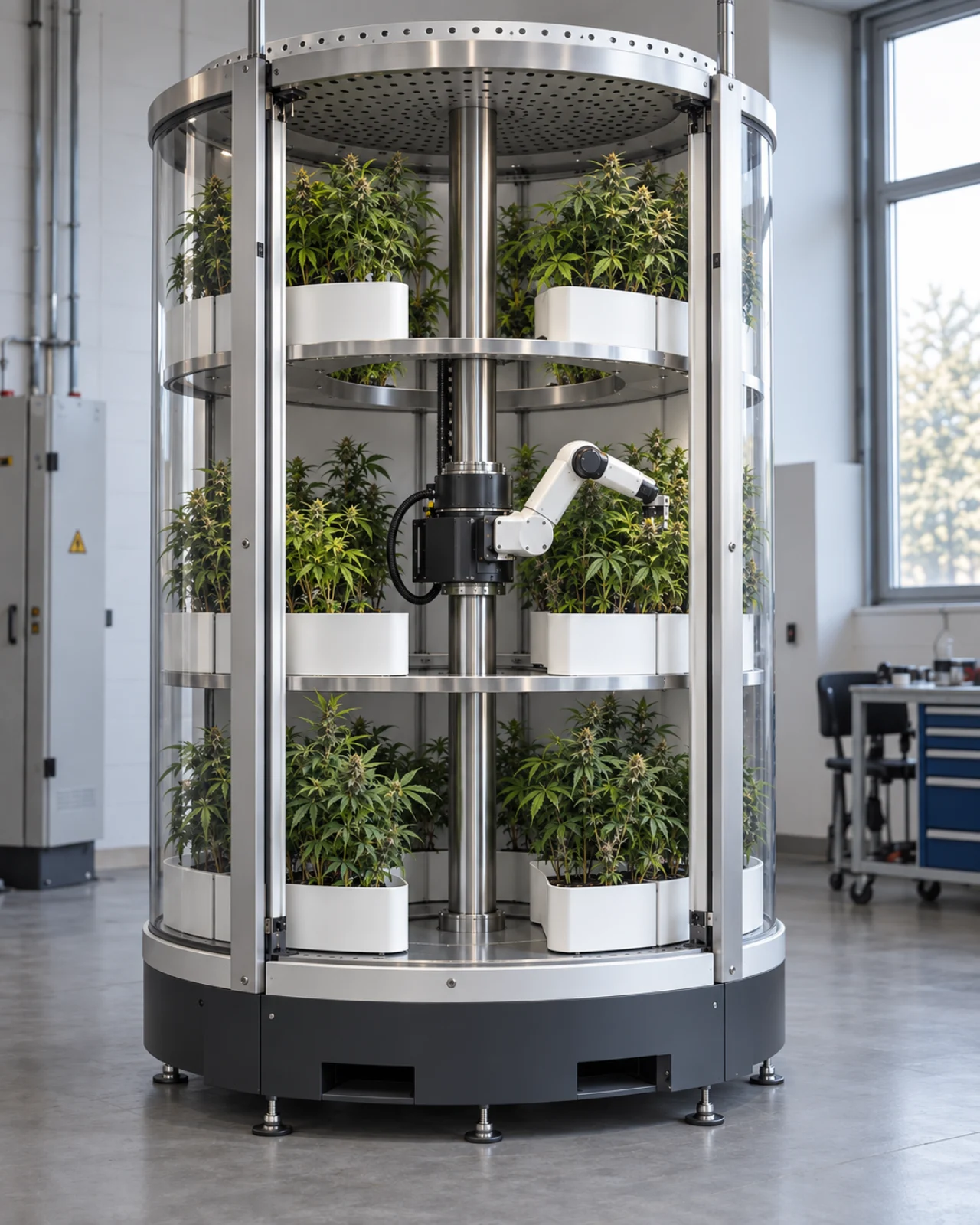
Concept visualisation — cylindrical module and central robotic mechanism.
One cylinder. Three tiers. A central robotic arm.
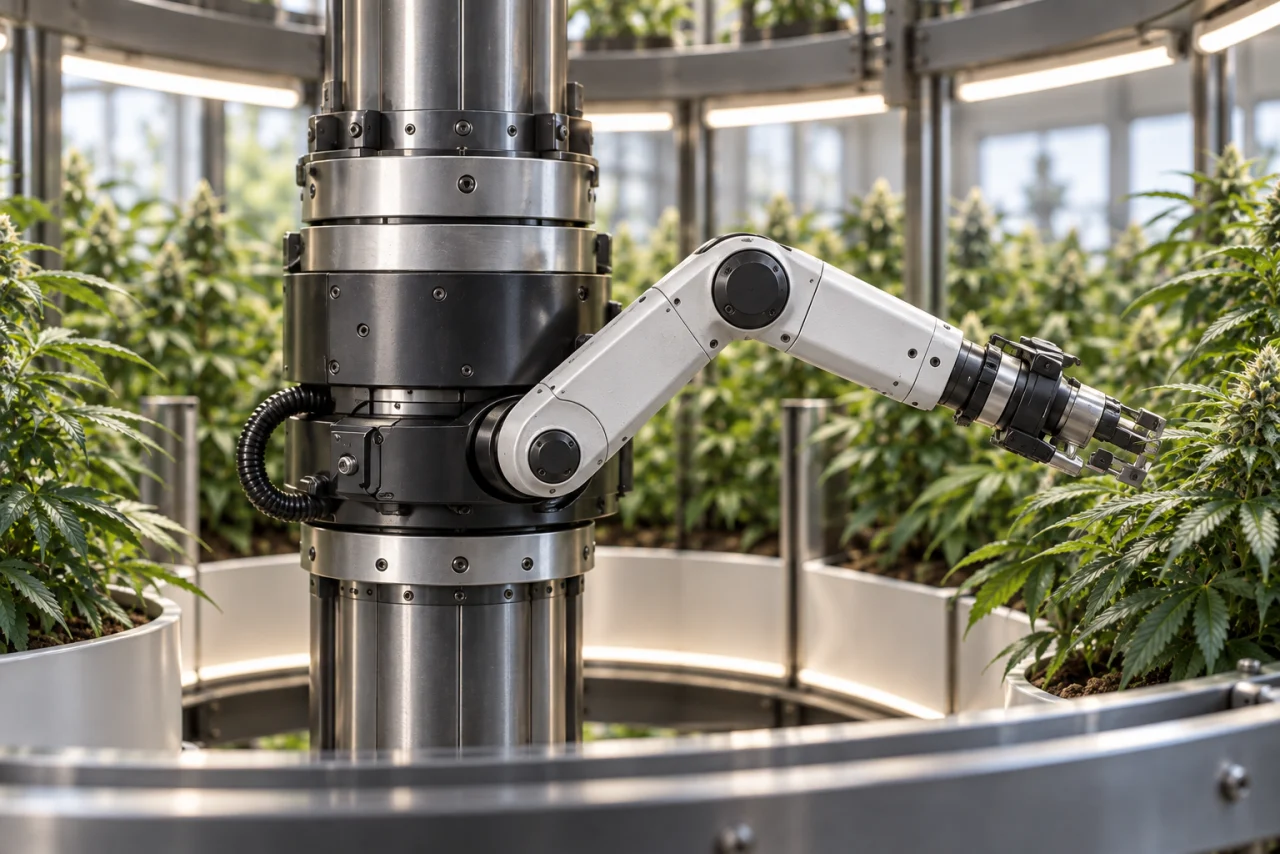
Our module concept places plants around three annular tiers, with an open central shaft connecting the levels. A single articulated arm sits on a carriage that moves vertically along a central column and rotates through 360 degrees.
The investment rationale is a repeatable unit with a defined footprint and a consistent interface to the wider facility. Throughput, serviceability and integration are central to the engineering approach and the economics of repeat deployment.
01
Three annular tiers
Segmented plant areas arranged around an open centre.
02
A central moving carriage
One arm, vertical travel and full rotation around the column.
03
Integrated visual observation
Perimeter cameras and a closer view from the robotic wrist.
04
A relocatable base
A single transport base, conceived for modular installation.
Concept visualisation — central robotic mechanism.
04LOCAL AI & AI AGENTS
Local intelligence. Across the business.
Our Local AI approach extends from production to the administrative work behind a regulated medical cannabis business. AI agents are designed to help teams find information, prepare documents and coordinate routine tasks, giving specialists more time for work that requires their judgement.
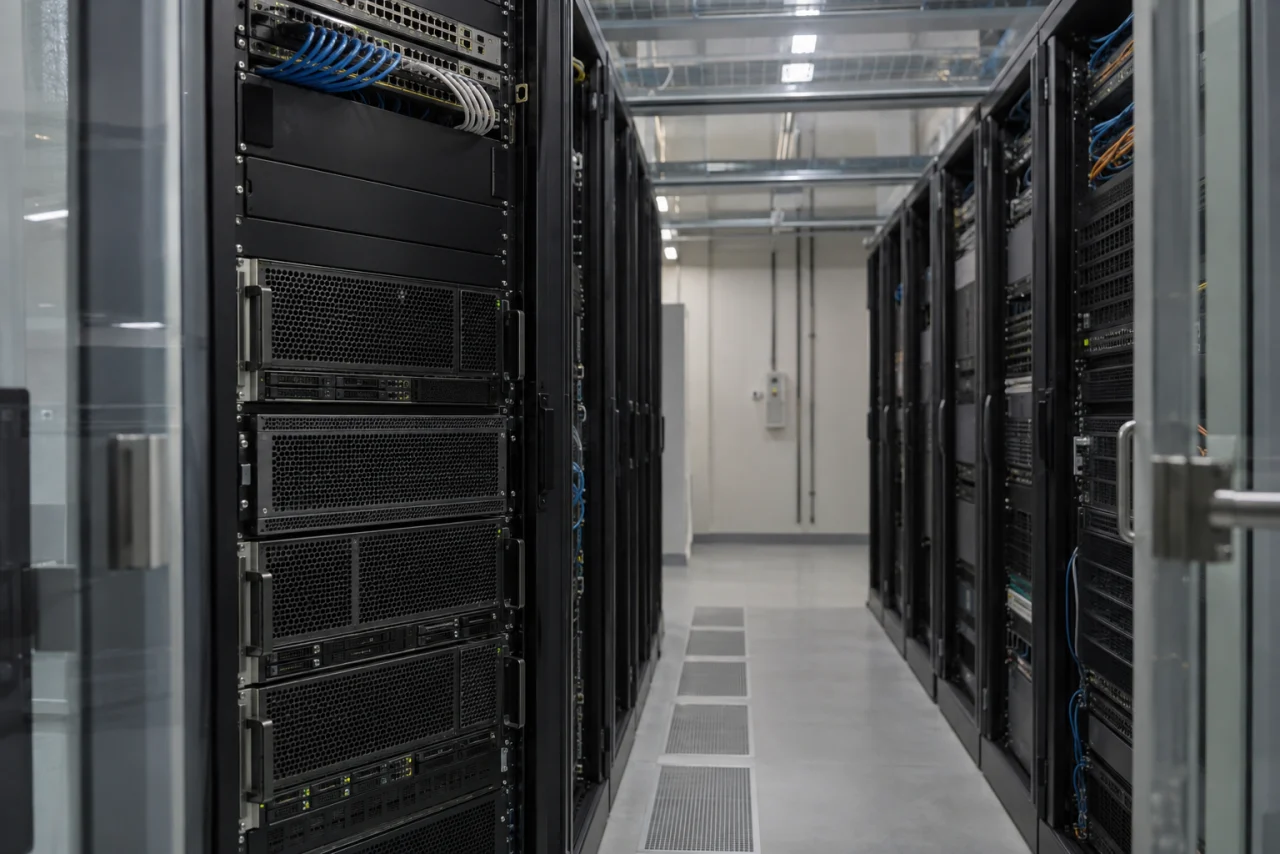
The architecture centres on dedicated local servers under company control. AI models, internal document search and agent workflows run within that on-site environment, keeping the processing of these workflows local.
On-site computingLocal servers host the models and agent workflows in our architecture.
Controlled accessRole-based permissions define which internal records and tasks an agent can access.
Traceable workSource references and action logs support review of the information used and work performed.
Concept visualisation — local servers for AI models, internal knowledge and agent workflows.
Less repetitive administration. More specialist attention.
An AI agent is a software assistant that carries out a defined sequence of tasks using approved information and tools. Our approach applies that support to the everyday work behind production, documentation and oversight.
01 / DOCUMENTATION
Prepare the paperwork
Assemble document packs, draft routine reports and procedure updates, and flag missing fields or inconsistent entries for review.
02 / INTERNAL KNOWLEDGE
Find the right information
Retrieve approved procedures and relevant operational records, summarise their contents and link back to sources for the team to check.
03 / ADMINISTRATION
Keep work moving
Organise follow-ups, prepare task lists and reminders, and help coordinate procurement paperwork, maintenance schedules and reporting deadlines.
04 / OPERATIONS
Support daily oversight
Bring observations and records together, highlight exceptions and help the responsible team organise investigations and permitted robotic workflows.
AI prepares. People review and approve.
Human review and authorised sign-off are central to the workflow. Regulatory submissions, pharmaceutical quality decisions and applicable batch-release responsibilities remain with the responsible qualified people.
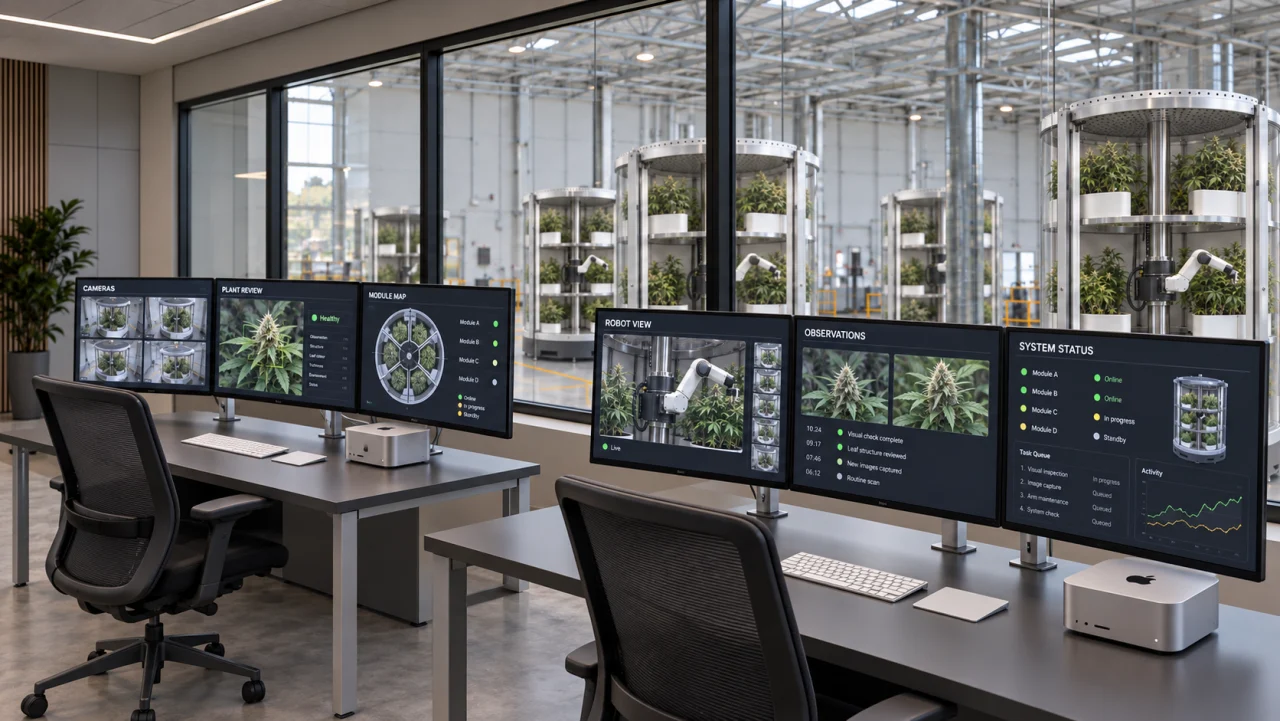
The planned command centre brings operational visibility and human oversight together. The wider quality approach connects documented procedures, traceability, qualified personnel and controlled decision-making throughout the facility.
For an investor, quality affects saleable output, customer acceptance and continuity of supply. The operating approach therefore addresses testing, deviations, supplier qualification, maintenance and the applicable release process alongside production capacity.
Concept visualisation — proposed command centre overlooking the hall.
06ENERGY & INFRASTRUCTURE
Treat energy as part of the business model.
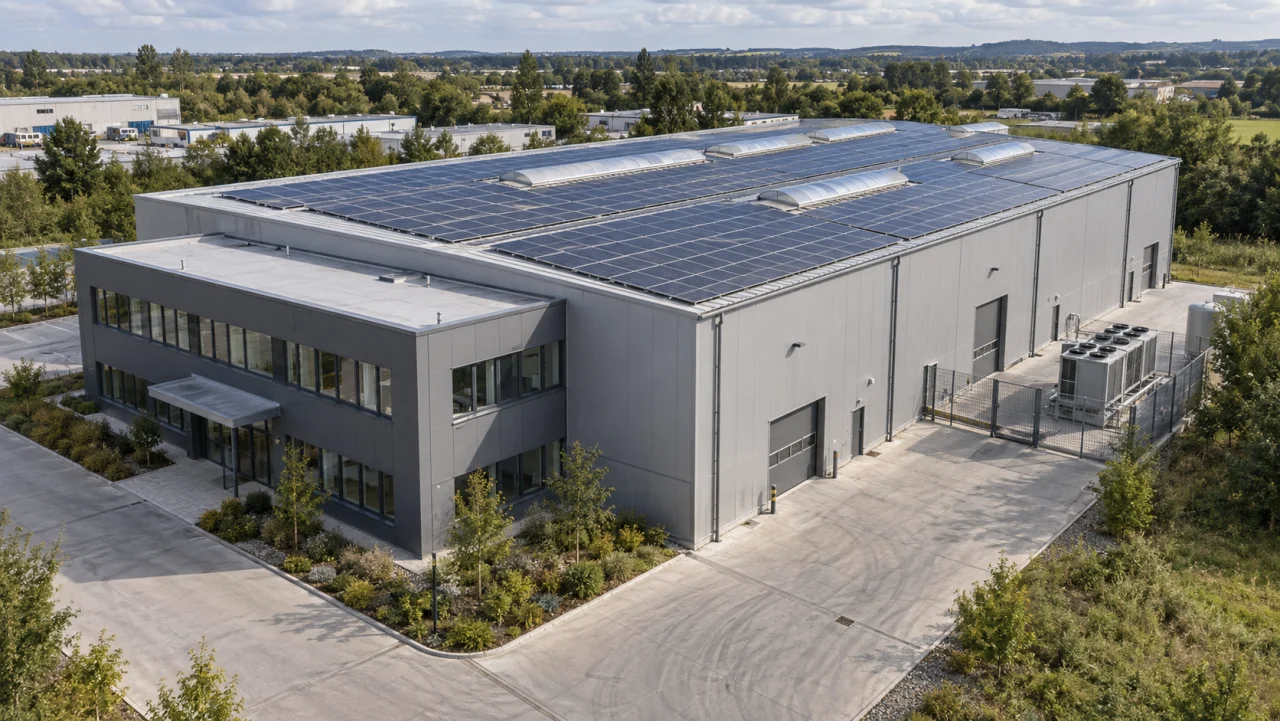
Energy infrastructure is part of the operating case. We plan to evaluate on-site solar generation, useful recovery of server heat and heat-pump options alongside the facility’s actual demand profile.
Our approach evaluates capital cost, operating benefit and integration as one system. Solar generation, heat recovery and heating infrastructure are considered alongside the production load, maintenance needs and continuity of operations.
Concept visualisation — proposed facility and solar roof.
01
Solar generation
Assess roof-mounted photovoltaics alongside the facility’s electricity demand and grid supply.
02
Server-heat recovery
Evaluate where recovered server heat could meet a useful demand in the building.
03
Site-specific heating
Compare suitable heat-pump options, including geothermal where site conditions allow.
Energy performance belongs in the operating model.
07THE OPERATING APPROACH
Commercial focus. Integrated execution.
Our approach connects pharmaceutical customer requirements with regulatory alignment, technology integration and facility economics. Each workstream serves the same objective: a coherent, commercially focused operating model.
Project sequencing, delivery milestones and capital allocation are discussed directly with prospective investors.
01
Commercial alignment
Validate buyer requirements, product positioning and the assumptions behind pricing, saleable volumes and customer qualification.
02
Regulatory alignment
Map the planned activities to the required authorisations, quality framework and responsible authorities before execution.
03
Technology integration
Evaluate module performance, reliability, serviceability and human oversight against an agreed acceptance framework.
04
Facility economics
Connect the operating layout, utilities, quality systems and staffing plan to a costed build and commissioning programme.
05
Quality and scale
Align qualification, quality controls and applicable release requirements with commercial supply and the approach to expansion.
08THE FOUNDERS
A direct conversation. With the people behind it.
Connect with Cultivanta’s co-founders to explore the business, the operating approach and the potential for investment alignment.
We welcome conversations with investors who see the potential in combining medical cannabis, pharmaceutical discipline and integrated technology in Germany.
The next conversation goes deeper: project specifics, the commercial model, regulatory documentation and investment structure. These details are reserved for direct discussions, with confidentiality arrangements where appropriate.
Discuss the intended customers, route to market and assumptions behind the operating model.
Examine the operating approach
Explore the engineering approach, regulatory workstreams and milestones that shape execution.
Discuss investment alignment
Consider the capital strategy, governance priorities and the role of a potential investment partner.
INVESTOR Q&A
A clear view of the opportunity.
The business, the regulatory framework and the path to execution. The details that shape a potential investment are discussed directly.
The business & opportunity
What is Cultivanta’s business focus?
Cultivanta focuses on medical cannabis production in Germany for authorised pharmaceutical partners. The concept brings cylindrical robotic modules, on-site intelligence and facility infrastructure into one operating model. The commercial emphasis is product supply, supported by technology and pharmaceutical quality discipline.
Is this medical cannabis or a recreational cannabis business?
The focus is exclusively medical cannabis and the pharmaceutical supply chain. The concept does not include recreational retail or a consumer cultivation club. Patient supply belongs within the German medical framework: physician prescribing and pharmacy dispensing against a prescription. See MedCanG § 3.
Who are the intended customers, and how does the business model work?
The intended customers are authorised pharmaceutical supply-chain partners. The business model centres on supplying medical cannabis under commercial agreements, with product specifications and quality requirements shaped around professional buyers. Customer strategy, product positioning and commercial terms are discussed directly with prospective investors.
Why is Germany the focus?
Germany provides a defined legal framework for medical cannabis cultivation and pharmaceutical supply. Our geographic focus brings the production concept, regulatory approach and intended customer market into the same business context. The investment case considers product positioning, supply-chain relationships and operating economics together.
What differentiates the Cultivanta approach?
Cultivanta treats production as an integrated system. A repeatable module design connects with on-site intelligence, human oversight and facility infrastructure. This approach puts consistency, traceability, serviceability and resource use into the same operating framework, with detailed performance and economic assumptions explored privately.
Regulation & quality
Can medical cannabis be cultivated commercially in Germany?
German law provides an authorisation route for medical cannabis cultivation. BfArM, the Federal Institute for Drugs and Medical Devices, is the relevant authority under MedCanG § 4. Commercial cultivation is an activity requiring authorisation; the legal framework is not automatic permission for a particular company. Read MedCanG § 4.
Which approvals and standards apply?
The exact requirements depend on the proposed activities and products. The assessment includes MedCanG authorisations, manufacturing and wholesale permissions where applicable under the Medicines Act (AMG), and the relevant GACP, GMP and distribution requirements. Site permissions and operational obligations must also be addressed. The regulatory overview links to the principal official sources.
How can investors discuss the regulatory framework in more detail?
The public overview explains the principal German and European frameworks relevant to the business. Project-specific regulatory matters, documentation and the scope of applicable authorisations are addressed in direct investor discussions. Explore the regulatory overview.
How is pharmaceutical quality addressed in the concept?
The intended operating model combines documented procedures, traceability, qualified personnel, appropriate testing and the applicable release process. GACP and GMP requirements need to be mapped to the relevant stages. AI observations can support oversight, but cannot substitute for pharmaceutical quality controls or the responsibilities of qualified personnel.
What does ongoing regulatory accountability involve?
A regulated medical cannabis business requires continuing attention to documentation, traceability and the obligations attached to its authorised activities. MedCanG includes recordkeeping and reporting requirements for authorisation holders. These responsibilities are part of the operating framework. See MedCanG § 16.
Technology & execution
Why use cylindrical robotic modules?
The cylindrical concept organises three plant tiers around a central robotic mechanism. Its business rationale is a repeatable production unit with defined interfaces to the facility. Engineering discussions cover workflow, serviceability, visual observation and the relationship between module configuration and operating performance.
What do AI agents do, and who stays in control?
An AI agent is a software assistant that follows a defined workflow using approved information and tools. Our approach covers document preparation, internal information retrieval, administrative coordination and operational observations. Role-based permissions, source references and action logs are design principles for that work. Responsible people review outputs, approve consequential actions and retain intervention and sign-off. Pharmaceutical quality decisions and applicable batch release remain with qualified personnel.
What does Local AI mean, and where does it run?
Local AI means running the models and their supporting workflows on dedicated on-site servers under company control. Our architecture keeps internal document search, model processing and agent coordination within that local environment, without sending those workflows to public cloud AI services. Access is scoped to authorised users, records and tasks. Explore the Local AI approach.
How can AI agents help with bureaucracy and documentation?
The intended workflows include assembling supporting documents, preparing report drafts, finding approved procedures, checking document completeness and organising deadlines and follow-ups. Agents can help staff gather and prepare material for regulatory or quality reviews. Authorised people verify the source material, approve the final documents and handle external submissions.
Why does Local AI matter to the investment case?
The business rationale is to reduce repetitive administrative effort, make internal knowledge easier to use and give specialists more time for production, quality and commercial priorities. Local infrastructure places control of the AI environment within the company. Hardware, maintenance and workflow design form part of the operating model; the detailed economics and performance assumptions are discussed directly with prospective investors.
How do the different parts of the facility work together?
The approach connects the production module, automation, pharmaceutical quality, site infrastructure and energy systems. These elements are considered together so that individual design decisions support the wider operating model. Technical architecture and project sequencing are explored in direct discussions.
How does modularity support the approach to scale?
Modularity provides a way to consider capacity in repeatable units while keeping the wider facility design coherent. Expansion planning connects those units with infrastructure, customer requirements and capital allocation. The configuration, capacity strategy and investment implications are discussed privately.
Investment & due diligence
Which areas are central to the capital strategy?
The capital strategy brings together pharmaceutical quality, regulatory work, engineering, facility infrastructure and the resources required for the operating model. The allocation, sequencing and financing structure are reserved for direct investor discussions.
How can investors explore participation?
We welcome an initial conversation to understand investment focus and strategic fit. Capital requirements, investment structure and participation terms are discussed directly, with confidentiality arrangements where appropriate. Connect with the founders.
What drives the economics of the business?
The operating model brings together product positioning, saleable output, customer requirements and capacity utilisation with labour, energy, testing, maintenance and capital expenditure. The financial model and its underlying assumptions are reserved for direct investor discussions.
What kind of investors would be a good fit?
We welcome financially focused and strategic investors with an interest in medical cannabis, pharmaceutical supply, automation or industrial infrastructure. The initial conversation explores investment objectives, relevant expertise and the potential fit with Cultivanta’s approach.
Who leads Cultivanta Intelligence?
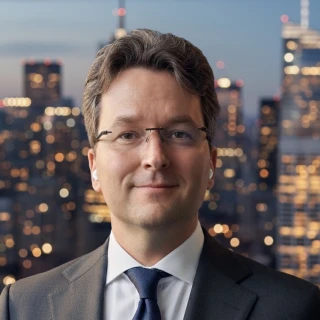
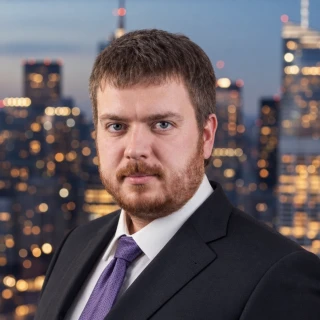
Cultivanta is led by Artem A. Semenov and Dmitry Solovyov, both Co-Founders & Co-CEOs. Their public professional profiles are linked in the founder section. Broader organisational, governance and counterparty matters are reserved for direct discussions.
What happens after an investor gets in touch?
The first conversation establishes investment focus, strategic fit and the scope for further discussion. More detailed commercial, technical and regulatory information can then be addressed privately, with confidentiality arrangements where appropriate. Discuss the investment case with us.